The corridor’s quiet reversal
Ask anyone who has done the Appian Way what they remember and a surprising number say the aqueducts, not the road and not the catacombs.
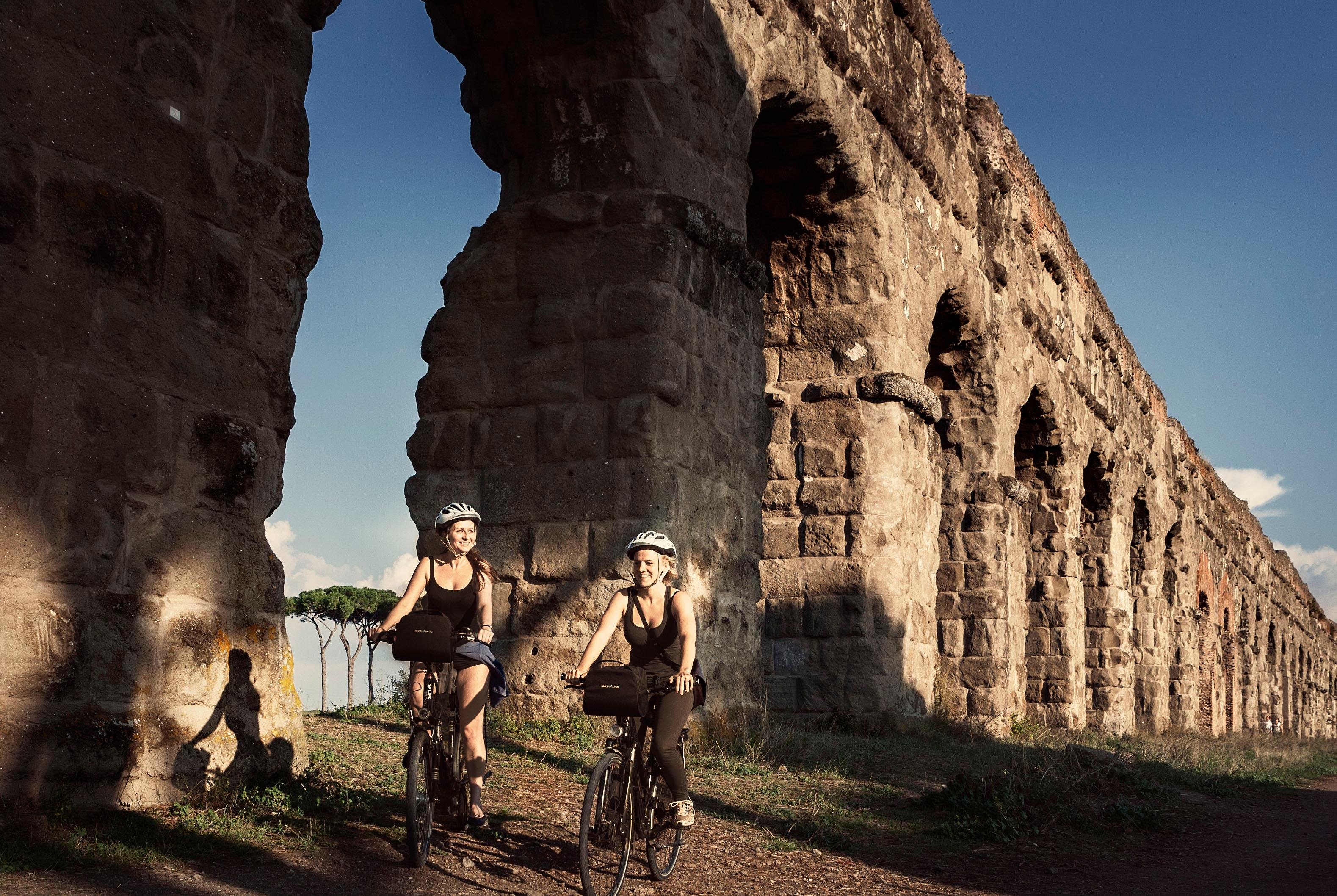
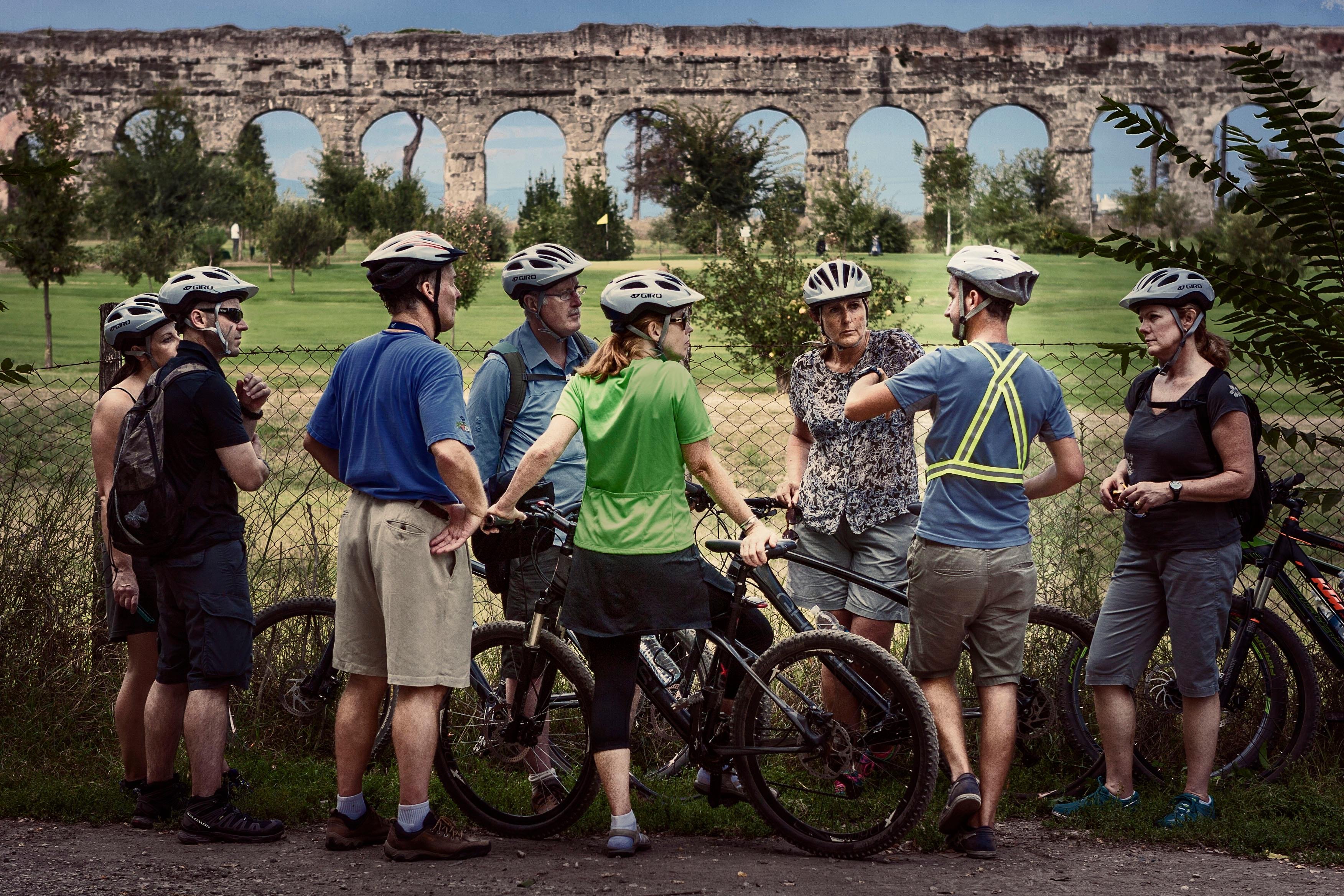
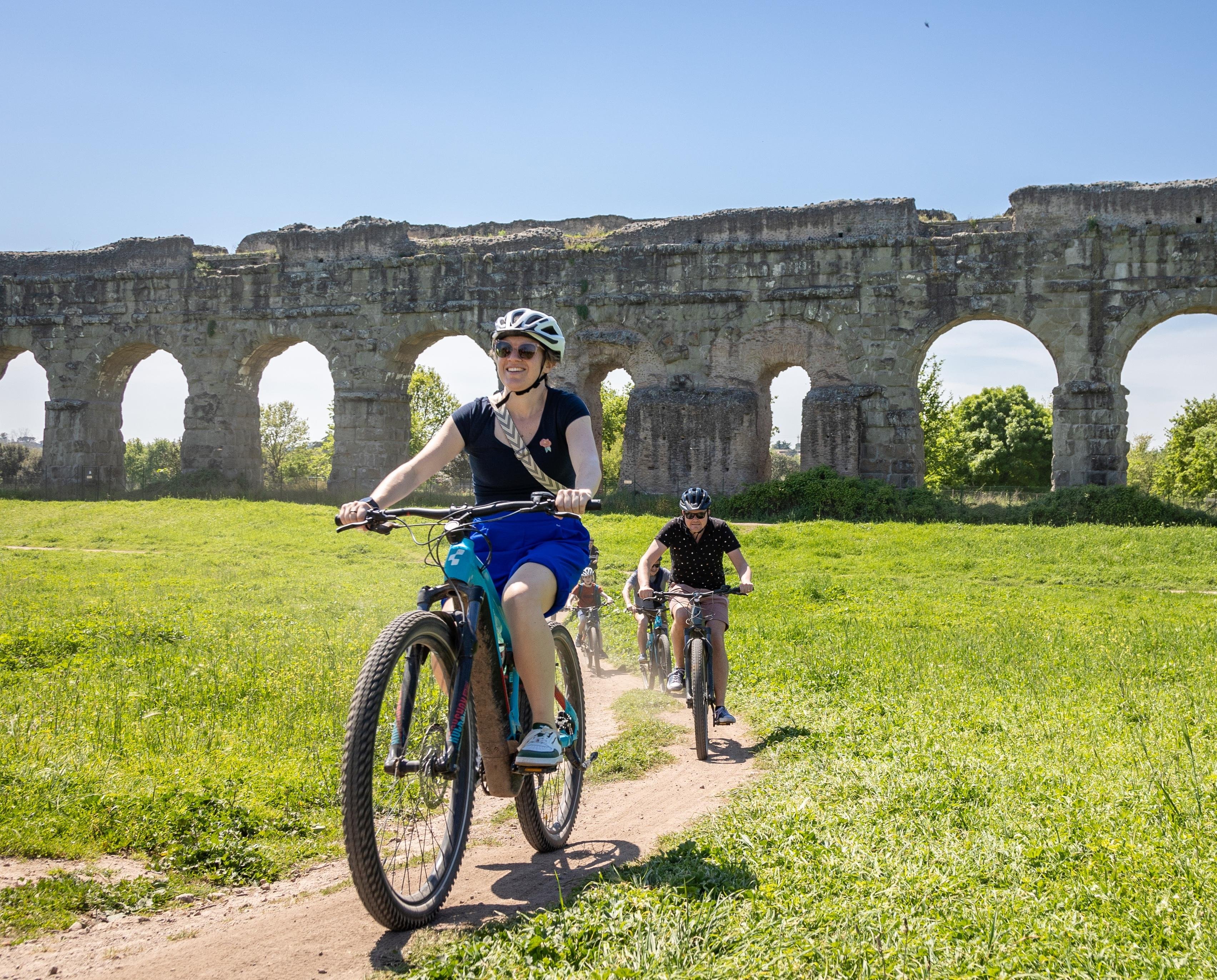
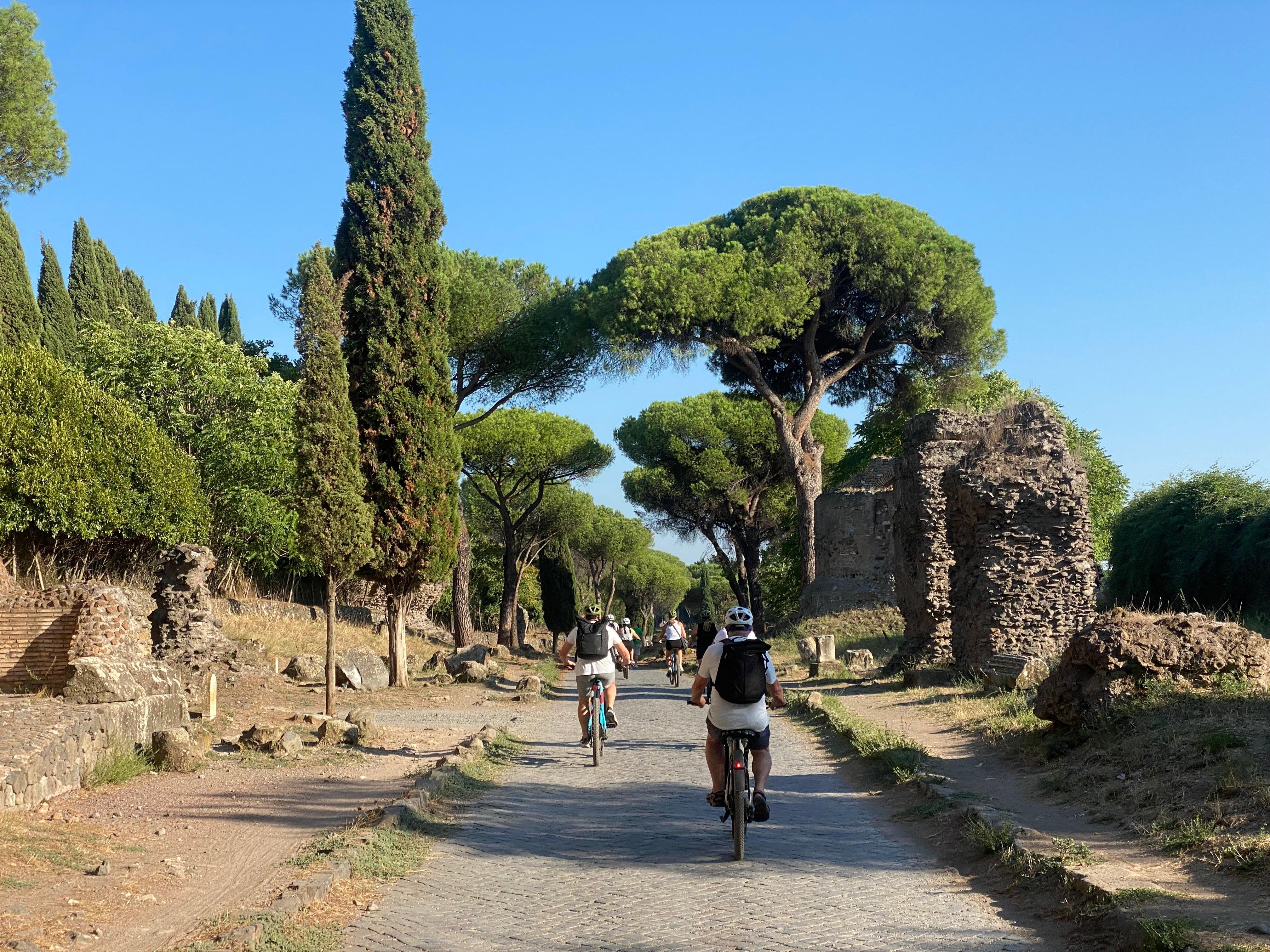
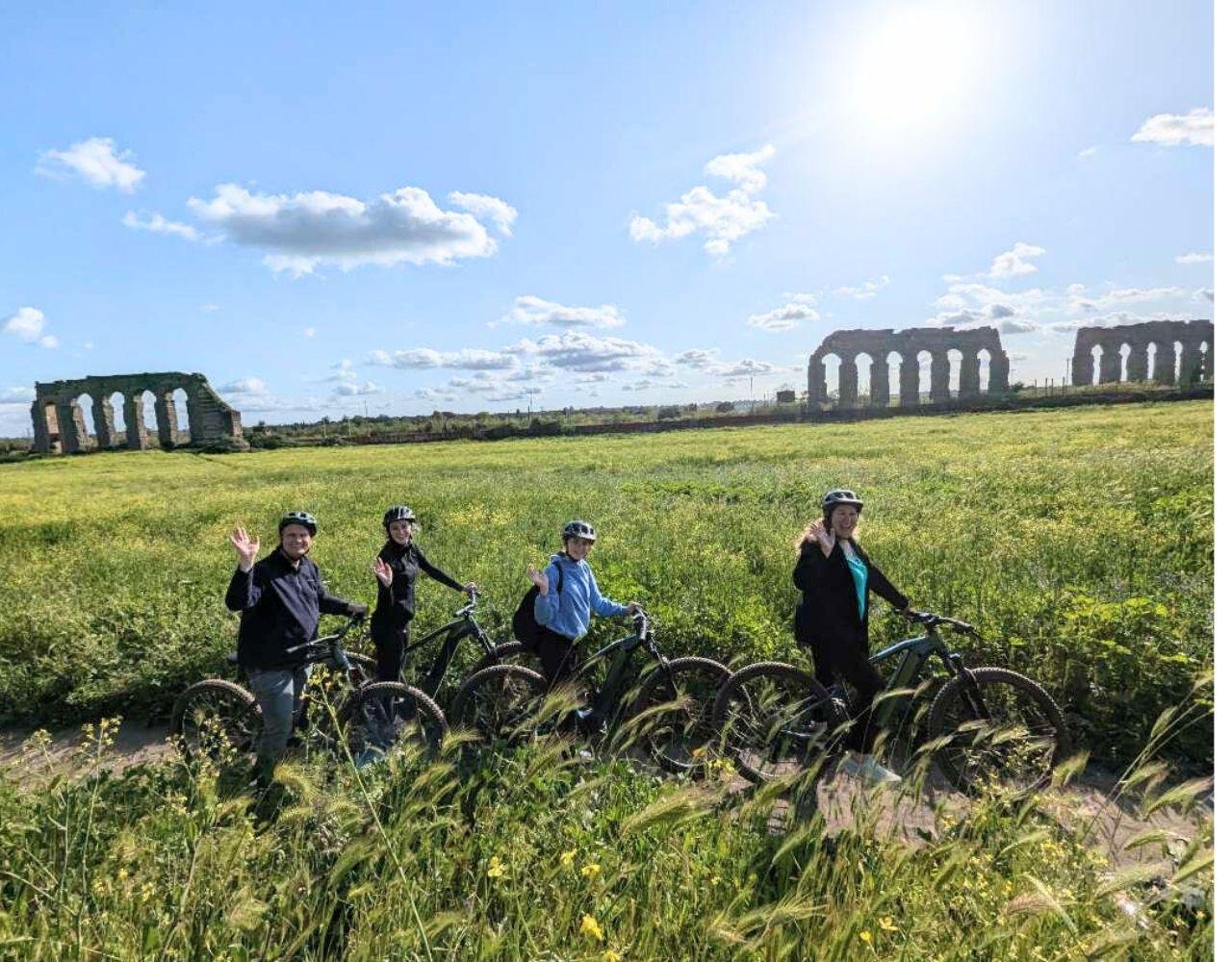
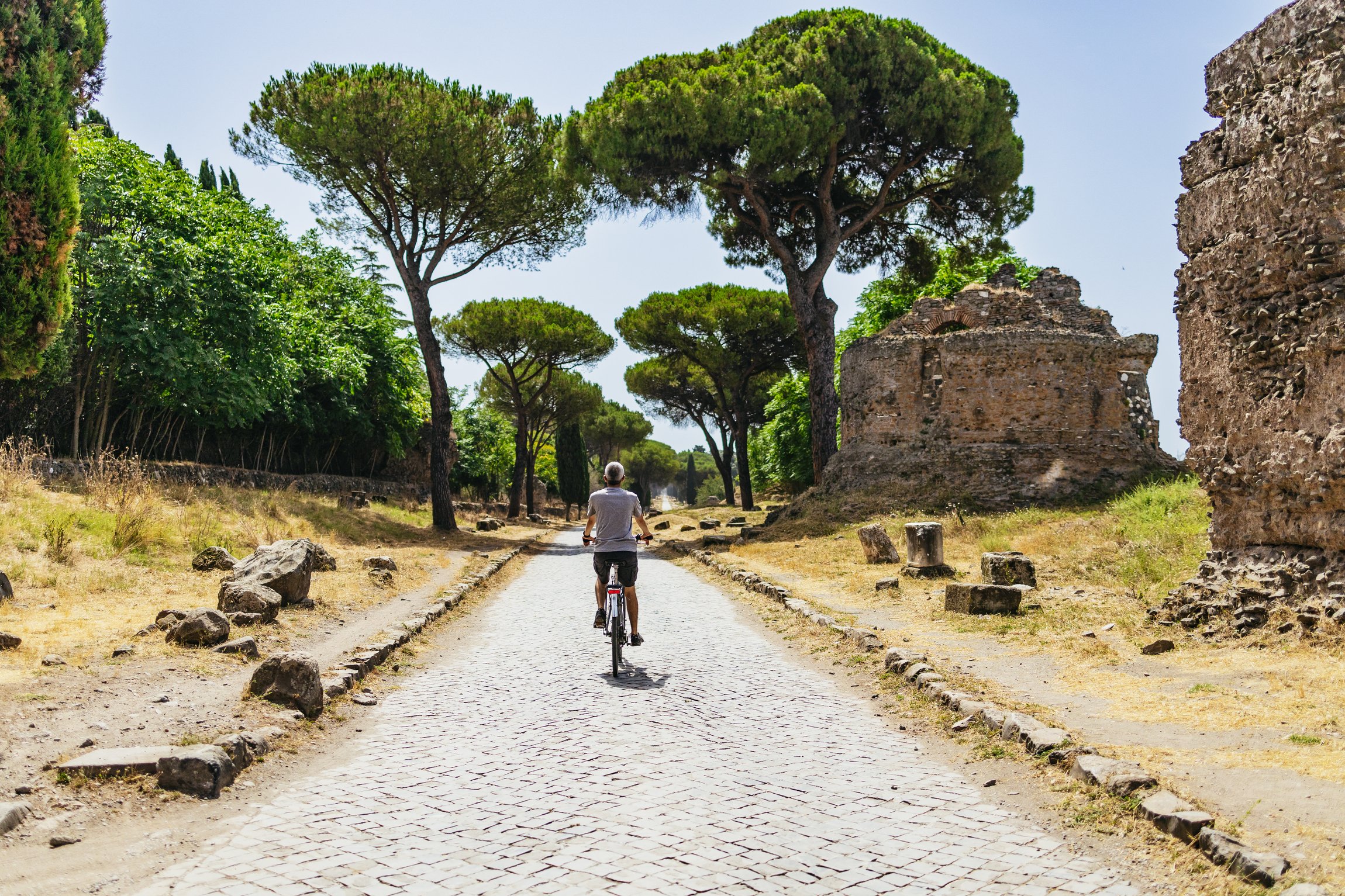
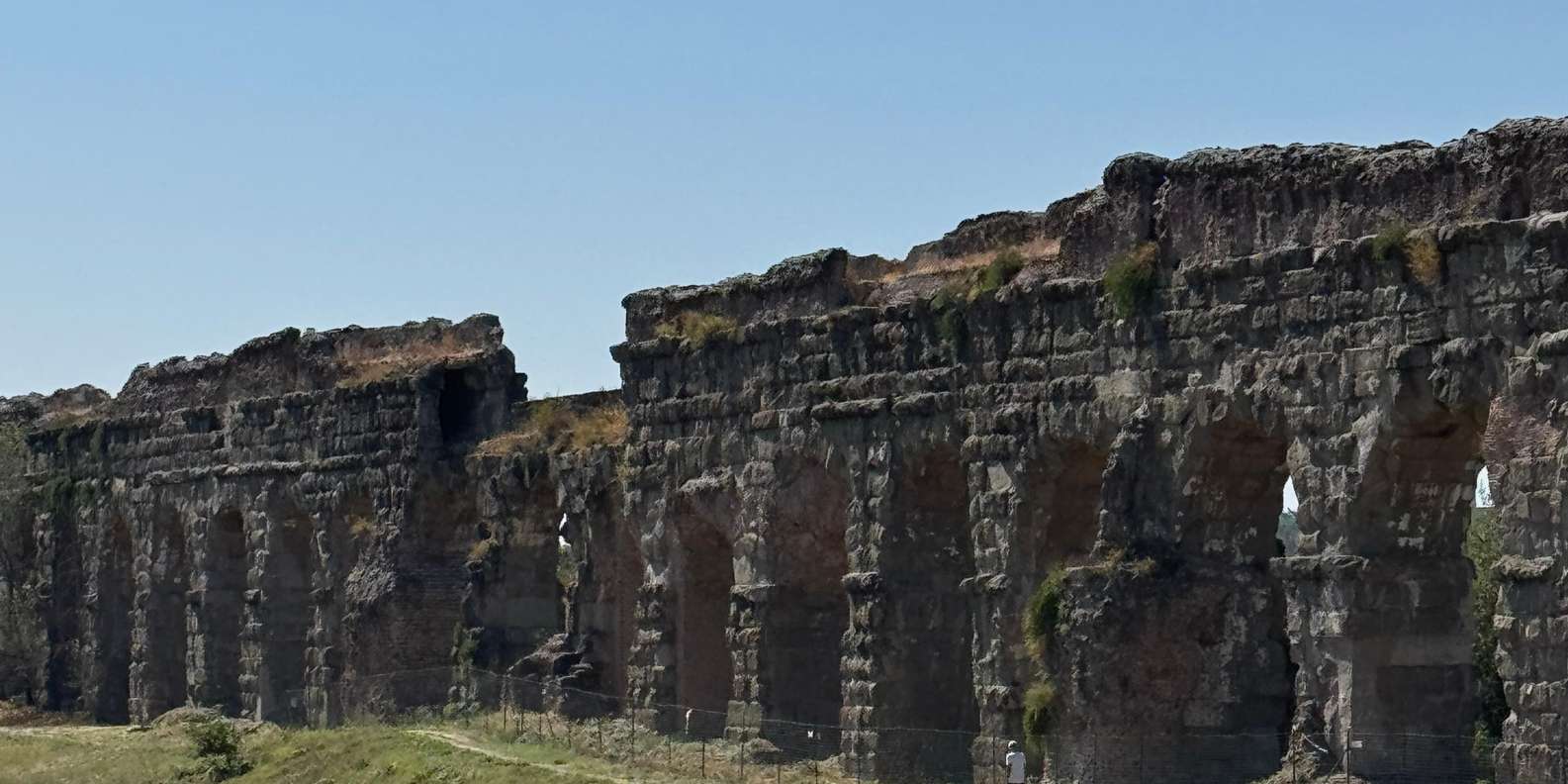
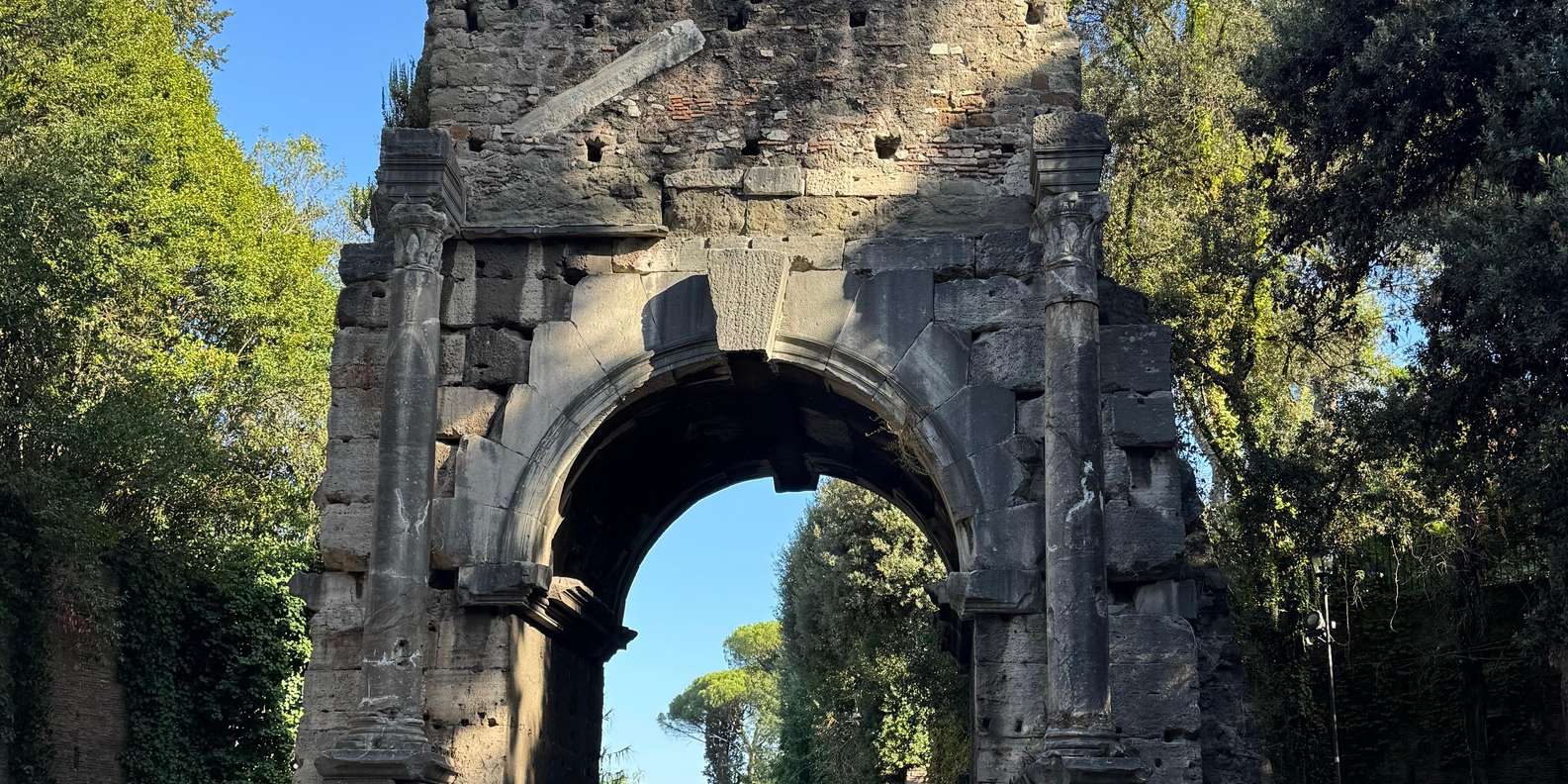
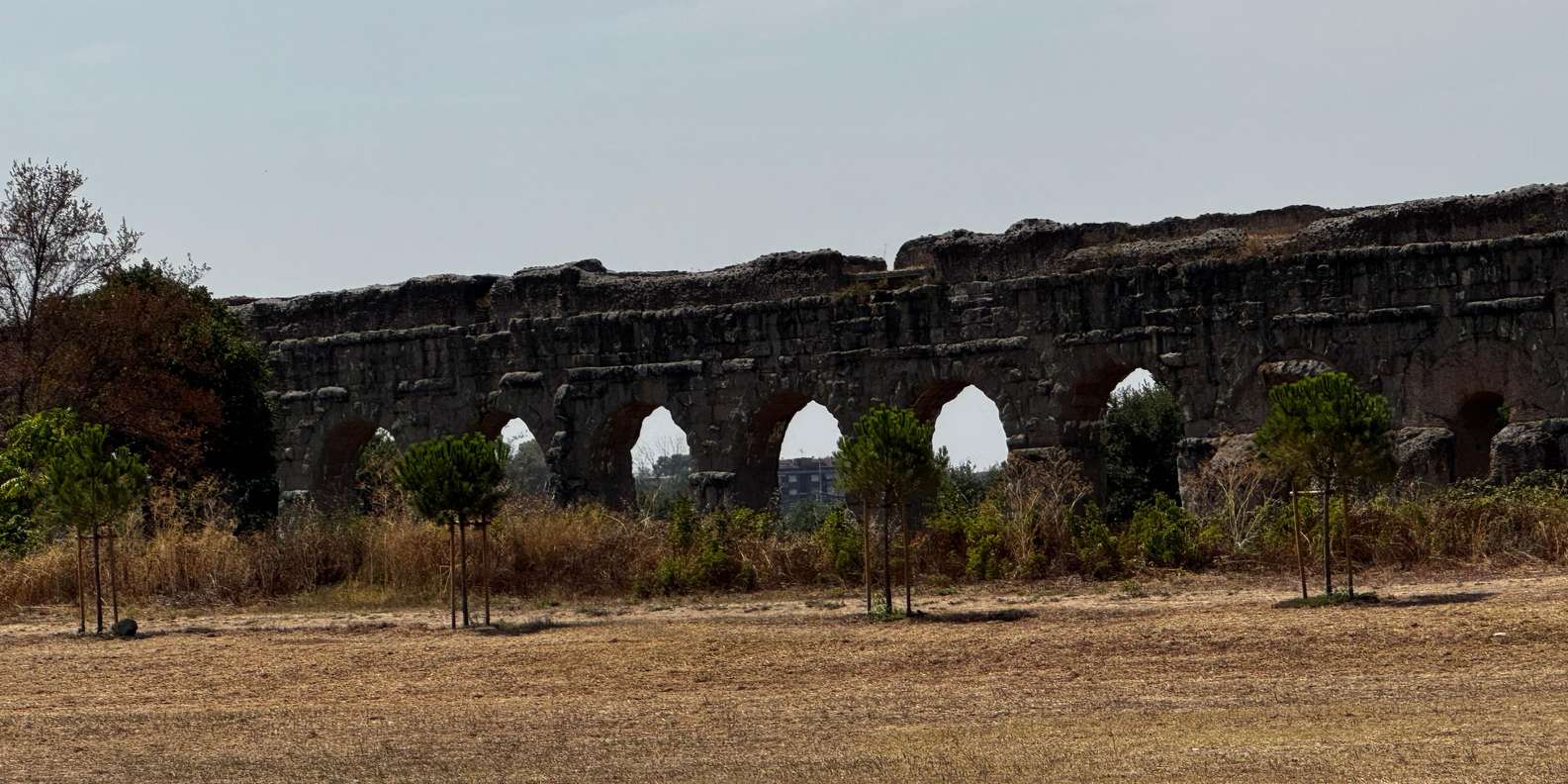
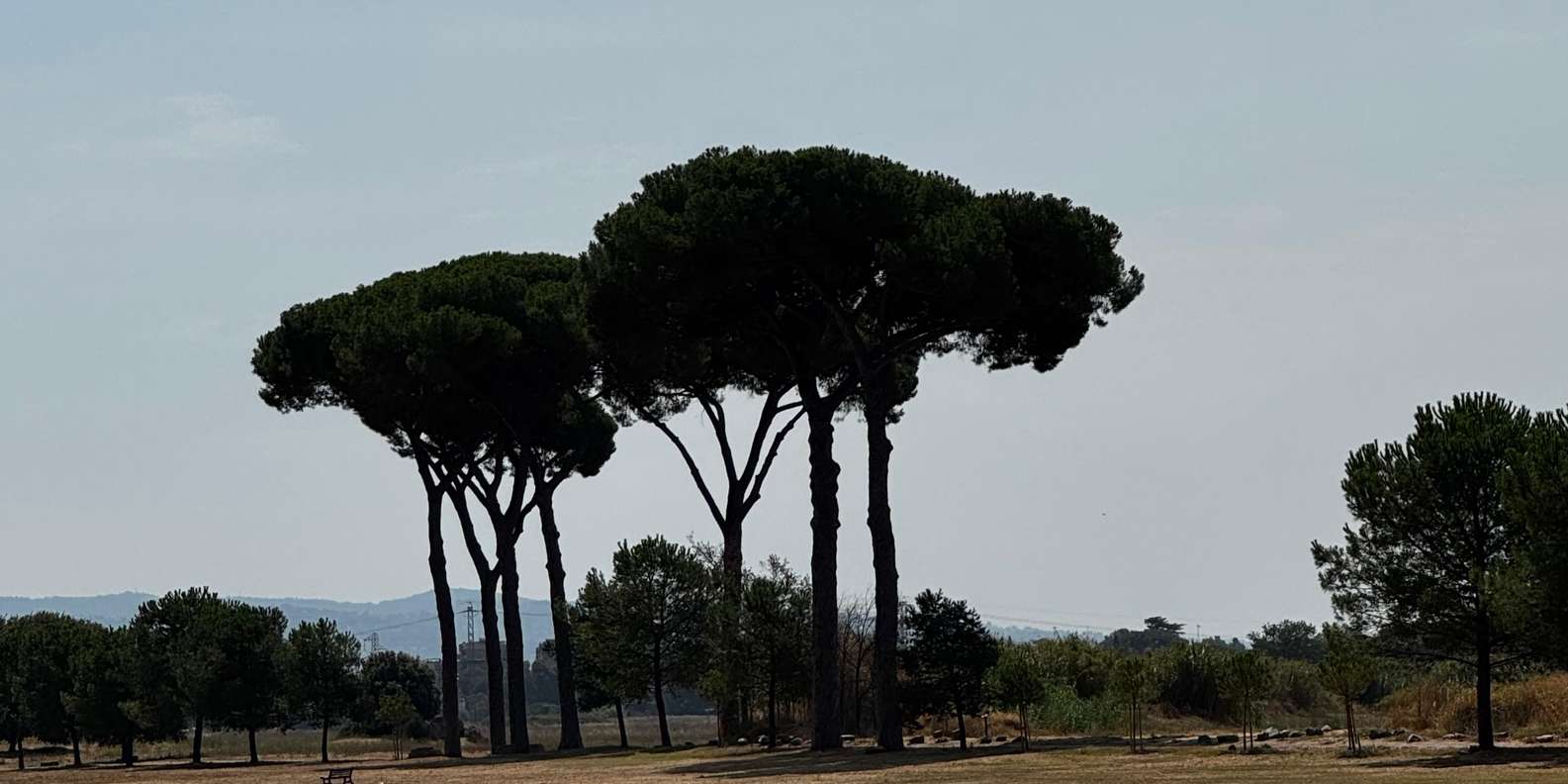
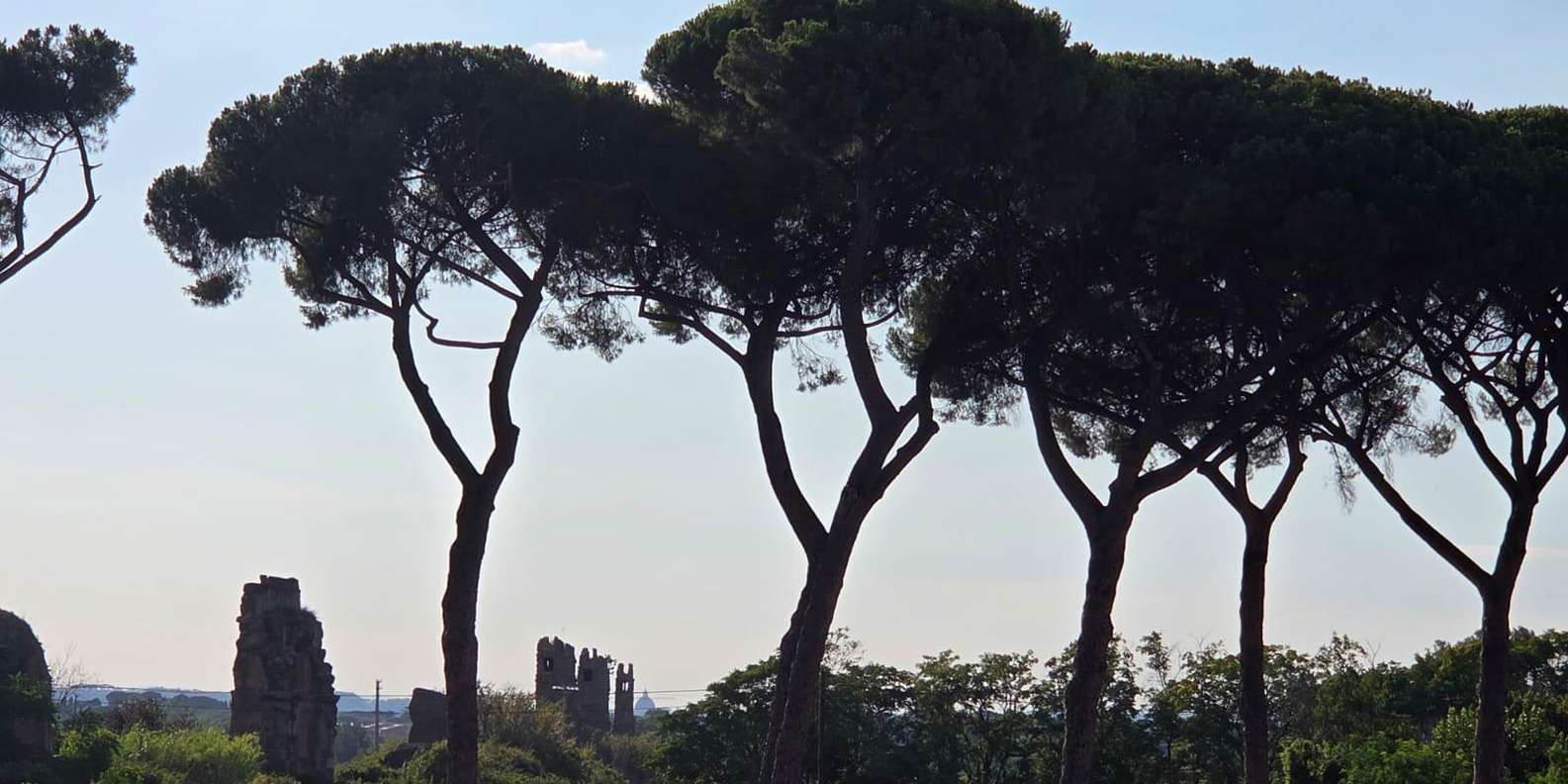
It makes sense once you have seen it. The road is a long, narrow, walled thing with tombs along it — historically extraordinary, visually restrained. The Parco degli Acquedotti is the opposite: an open field with the arcades of the Aqua Claudia striding across it, unfenced, uncrowded, with Rome nowhere in sight. It is the single most cinematic landscape inside the city limits and it is free to walk into.
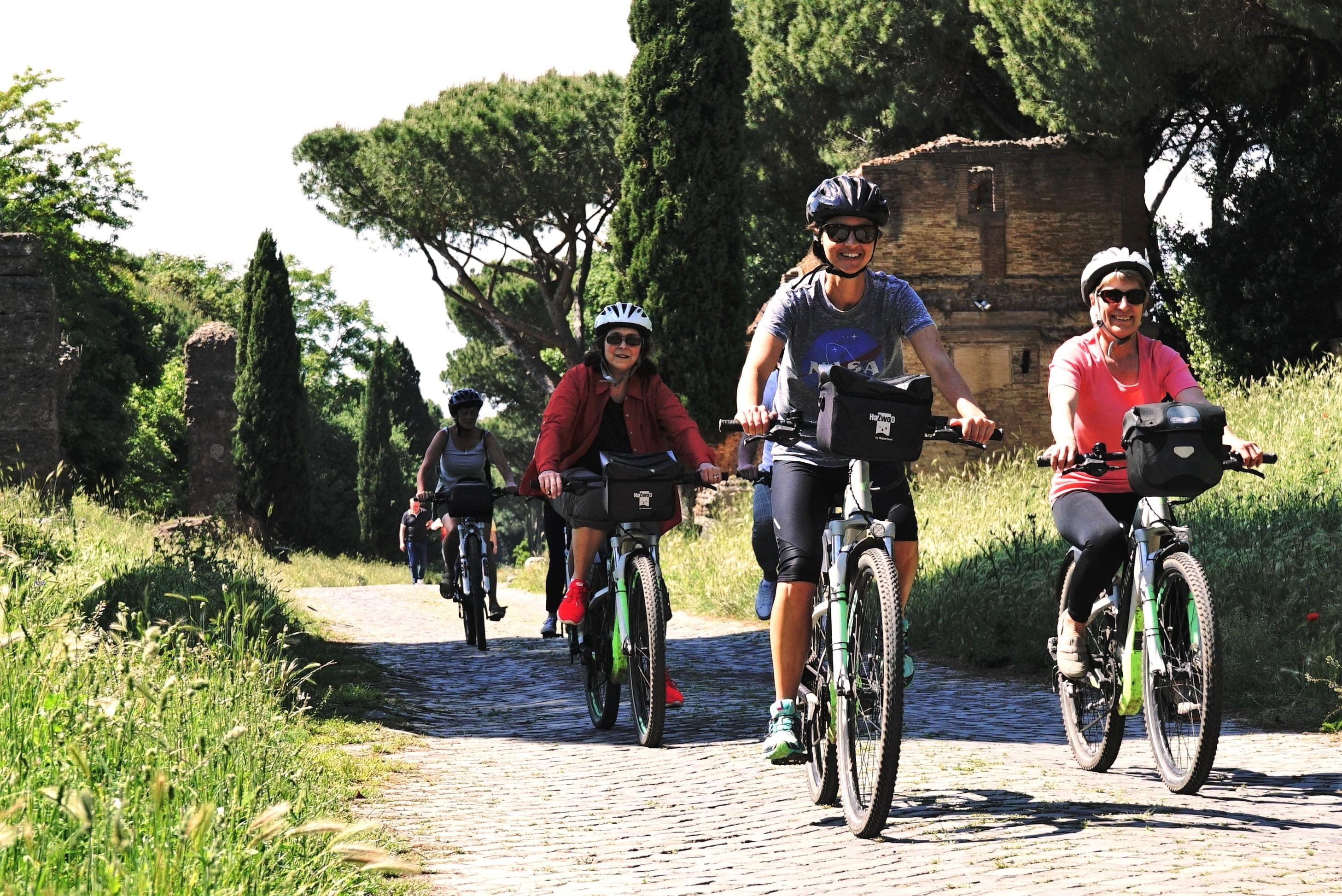
Most corridor tours treat it as the far turn of a loop, twenty minutes at the end of a day that has been mostly underground and mostly on basalt. The rides on this page invert that.
See the aqueduct ride
What you are trading
You lose the catacombs. These routes go above ground the whole way. If you have never been in a Roman catacomb and this is your only chance, book a tour that includes one — the catacomb options are on their own page — because the aqueducts will still be there on a return visit and the catacomb entry is the harder thing to arrange yourself.
You gain time in the landscape, and a shorter day. Without a forty-minute guided descent and the queuing around it, the ride is more continuous. For anyone claustrophobic, travelling with small children, or simply not interested in early Christian burial, that is not a compromise at all — it is the correct booking.
The Caffarella, which nobody mentions
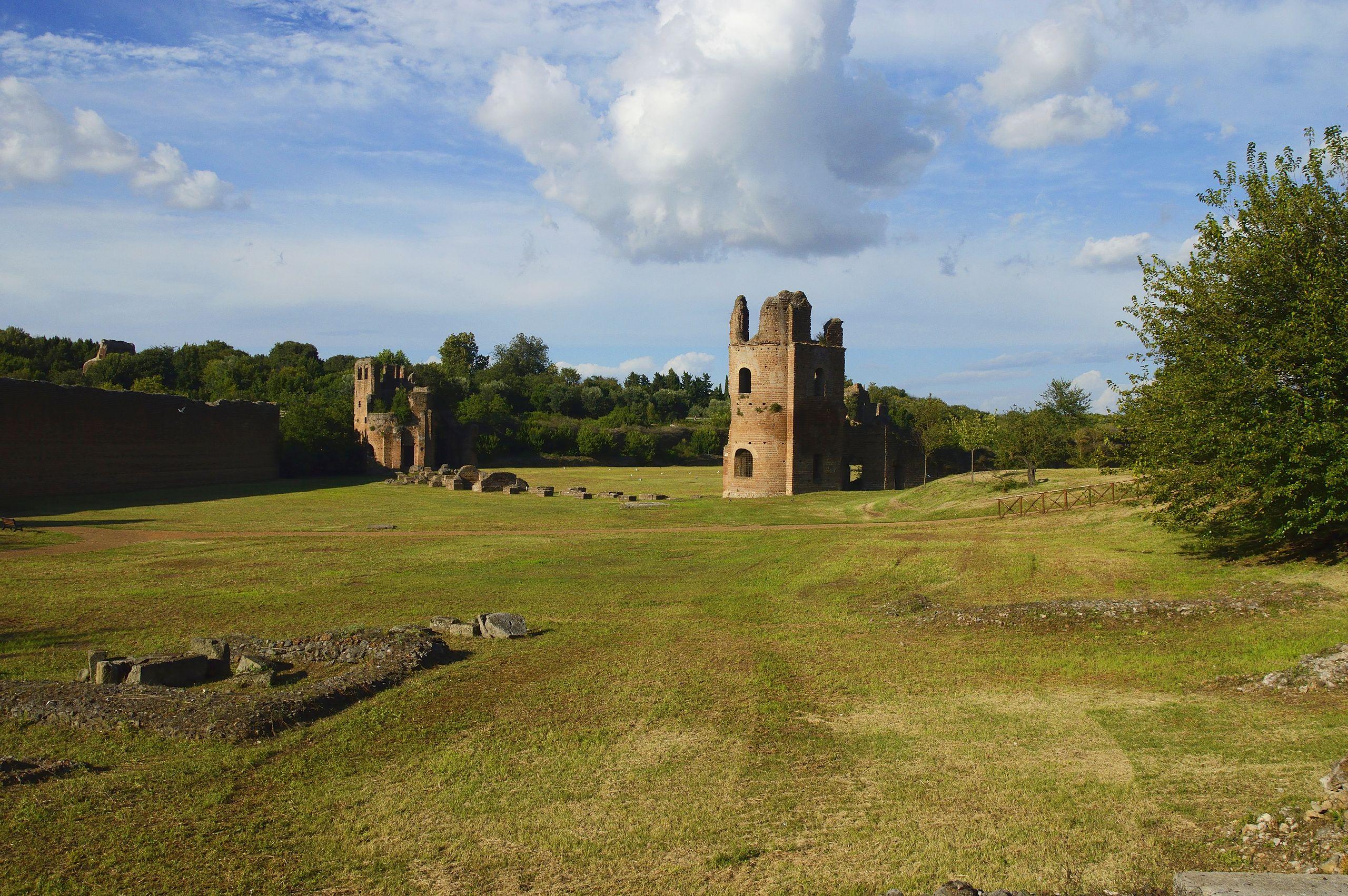
Between the road and the aqueduct park lies the Caffarella valley: a working agricultural landscape of sheep, springs and hedgerows that has somehow never been built on, sitting inside a European capital. It has no ticket, no gate and no marketing.
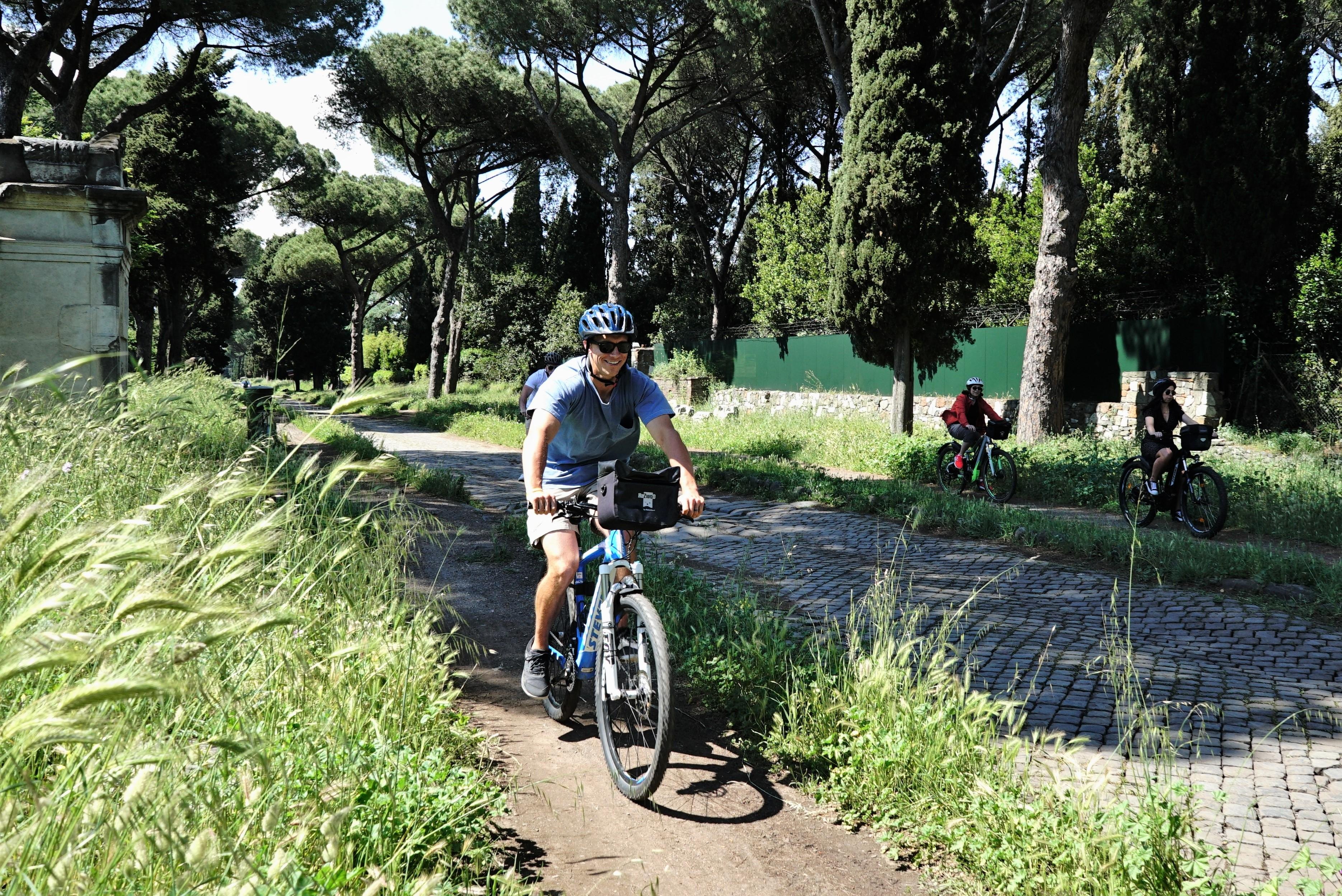
For riders it is the best surface of the day — packed dirt paths rather than basalt — and the section where an e-bike stops feeling like equipment and starts feeling like a bicycle. Several operators route through it precisely for that relief.
What the aqueducts actually are
The arcades in the park carried water into Rome from the hills to the east. The Aqua Claudia, begun under Caligula and completed under Claudius in AD 52, is the one whose arches dominate the field; the Aqua Felice, a sixteenth-century papal aqueduct, runs alongside and is frequently mistaken for it, which is why the photographs in the park often show two different centuries in one frame.
This is the same engineering achievement UNESCO cited when it inscribed Via Appia. Regina Viarum in 2024 — infrastructure rather than monument, built to work rather than to be looked at, and still standing in a field two thousand years later because it was built properly.
Getting there without a tour
The park is reachable on Rome’s Metro A to Giulio Agricola or Subaugusta and a short walk, which makes it the one part of the corridor that is genuinely easy to do independently and for free. If a tour does not suit your day, go anyway — take the metro, walk into the field, and see the thing everybody photographs.
The reason to ride rather than walk is not the aqueducts themselves but the chain: road, then valley, then arches, in one continuous half day. That sequence is what the corridor is, and it is very hard to assemble on foot or on public transport.
We are not affiliated with any tour operator or with the Parco Regionale dell’Appia Antica. Tours here are sold by GetYourGuide and we earn a commission if you book through our links, at no extra cost to you.